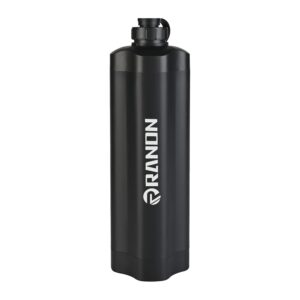
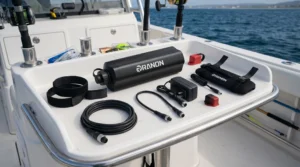
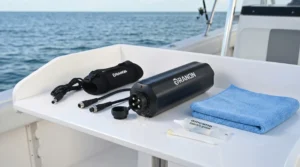
Quick Answer: RANON offers its direct-to-reel lithium battery in two capacity tiers, each paired with a matched charger — the YT-FRB-N5Ah charger for the 5Ah battery and the YT-FRB-N10Ah charger for the 10Ah battery. The right choice depends on three factors: how long you fish per trip, how much deck weight you want to carry, and how much charging time you have between trips. This guide breaks down the engineering trade-offs so you can choose with confidence instead of guessing.
1. Why RANON Sells Two Capacity Tiers Instead of One
Electric reel batteries are not one-size-fits-all. A weekend angler running a half-day trip has completely different power needs than a charter captain running deep-drop rigs from sunrise to sunset. Rather than forcing every customer into a single oversized (and overpriced) battery, RANON built its Deep-Drop and Kite Reel Battery line around two capacity tiers that plug into the same direct-to-reel system — the same connector, the same locknut-secured terminal, the same electrode protection cover — so upgrading capacity never means learning a new setup.
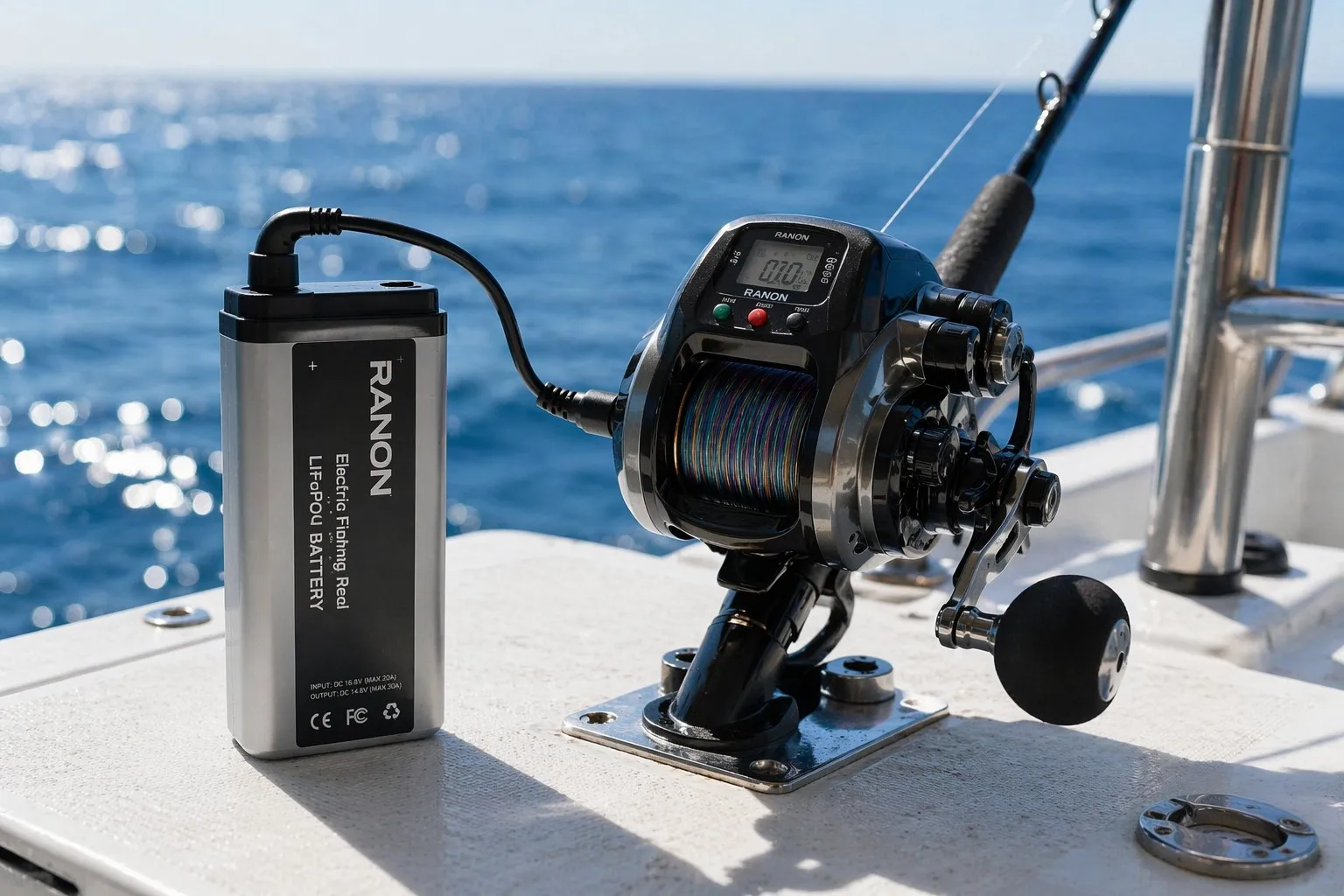
Both batteries are portable lithium units engineered to plug directly into electric fishing reels, eliminating the long battery cables that typically run across a wet boat deck. This is the core RANON design philosophy: fewer cables, fewer trip hazards, faster rigging.
2. Understanding the Ah Rating: What Capacity Actually Means
Amp-hours (Ah) describe how much electrical charge a battery can store and deliver. In simple terms, a 10Ah battery stores twice the energy of a 5Ah battery at the same voltage. That means, in principle, double the runtime — but real-world fishing conditions rarely match laboratory conditions.
An electric reel doesn’t draw a constant, steady current. It pulls light current during a controlled descent, moderate current during standard retrieves, and a heavy current spike during a fast retrieve under load or a deep-drop haul against strong current. This is why anglers should think of the 5Ah vs 10Ah decision less like “double the hours” and more like “double the safety margin for demanding retrieves.”
3. Side-by-Side Comparison
| Factor | 5Ah Battery | 10Ah Battery |
|---|---|---|
| Relative energy capacity | Baseline | 2x the baseline |
| Relative weight | Lighter, easier to mount with Velcro straps | Heavier — factor this into rod balance |
| Matched charger | YT-FRB-N5Ah charger | YT-FRB-N10Ah charger |
| Relative charge time | Shorter | Longer (roughly proportional to capacity) |
| Best-suited trip length | Shorter sessions, backup-battery users | Longer sessions, fewer battery swaps |
| Connector system | Locknut-secured direct-to-reel connector | Locknut-secured direct-to-reel connector |
| Installation methods | Direct kite-reel + Velcro strap mounting | Direct kite-reel + Velcro strap mounting |
Both batteries share the same core hardware philosophy: a connector with an electrode notch that must be aligned before insertion, a locknut that must be tightened (not just hand-snug) to prevent the connection from backing out under vibration, and an electrode protection cover that must be fastened whenever the battery is not actively connected.
4. Choosing by Fishing Style, Not Just Trip Length
Recreational anglers running shorter sessions
If most of your trips are shorter outings, or you already carry a spare battery as backup, the 5Ah battery is usually the more practical choice. It’s lighter on the rod, faster to top up between trips, and less expensive to own two of — which many recreational anglers prefer over owning one large battery, since two 5Ah units give you built-in redundancy if one battery needs to charge.
Charter captains and full-day offshore trips
If you’re running back-to-back charters or long deep-drop sessions where swapping batteries mid-trip isn’t practical, the 10Ah battery reduces how often you need to disconnect, dry, and recharge. Fewer battery swaps also means fewer opportunities for saltwater exposure at the connector — every disconnect-reconnect cycle is a moment where moisture or salt residue can get into the terminal area if you’re not careful.
Kite reel setups
For kite reel applications, the battery plugs directly into the reel with no intermediate cabling. Because kite reel positioning is sensitive to weight and balance, some anglers prefer the 5Ah battery specifically for how it sits on lighter kite rigs, while reserving the 10Ah battery for heavier deep-drop rods mounted with Velcro straps.
5. The Locknut-Secured Connector: Why It Matters More Than Capacity
Regardless of which capacity you choose, the single biggest factor in real-world reliability is connection integrity — not battery size. RANON batteries use a locknut-secured connector specifically because loose terminals are the most common cause of field failures in marine electronics.
Why loose terminals are dangerous, not just inconvenient: a loose connection increases electrical resistance at the contact point. Under the load an electric reel draws — especially during a fast retrieve — that resistance generates heat. Sustained heat at a loose terminal can damage the battery’s internal components or the reel’s power port. This is why the installation procedure calls for tightening the locknut fully rather than leaving it hand-snug “for convenience.”
Correct connection sequence (same for both capacities):
- Align the electrode notch on the battery connector with the electrode notch on the reel or charger plug.
- Insert the plug fully — don’t stop halfway.
- Tighten the locknut completely.
- Confirm the battery position doesn’t interfere with the rod, reel, or boat edge.
- After use, fasten the electrode protection cover before storage.
6. Charging Procedure and Power Light Meanings
Both the 5Ah and 10Ah batteries typically arrive at around 50% charge and should be fully charged before first use, using only the matched RANON charger (YT-FRB-N5Ah or YT-FRB-N10Ah — chargers are not interchangeable across capacity tiers without confirming compatibility).
Standard charging steps:
- Align the electrode notch of the battery connector with the electrode notch of the charger plug.
- Insert the plug fully.
- Tighten the locknut.
- Connect the charger power cord to the charger.
- Plug the charger into an AC 100–220V, 50Hz–60Hz outlet.
- Confirm the red light is on, indicating charging has started.
- When charging is complete, unplug the charger power cord.
- Disconnect the battery from the charger.
- Fasten the electrode protection cover.
| Power light status | Meaning | Action |
|---|---|---|
| Red light on | Charging in progress | Continue charging in a well-ventilated area, away from flammable materials |
| Green light on | Fully charged | Disconnect the charger and prepare for use or storage |
| Red light flashing | Abnormal charging | Stop charging immediately, check for moisture or a loose connection, and contact RANON Battery support if the issue continues |
Charging time will naturally scale with capacity — a 10Ah battery starting from the same charge percentage will take proportionally longer to fill than a 5Ah battery on the same charger amperage. Plan your between-trip charging window accordingly rather than assuming both capacities charge in the same time.
7. After-Fishing Maintenance: The Step Most Anglers Skip
Saltwater and humidity are the primary threats to any marine electrical connector, regardless of battery capacity. After every trip:
- Disconnect the battery from the reel.
- Wipe the outer housing with a clean, damp cloth (freshwater), followed by a dry cloth.
- Check the connector area specifically for trapped moisture — this is the area most likely to hide residual salt.
- Ensure the connector and electrode cover area are completely dry before fastening the electrode protection cover.
- Store the battery away from extreme heat, freezing temperatures, and standing water.
Never store a battery while it’s still damp from the boat. Moisture trapped under the electrode cover accelerates corrosion and can compromise both performance and warranty eligibility.
8. Warranty Coverage: What’s Protected and What Voids It
RANON backs every battery sold through RANON or authorized dealers and OEM distributors against defects in materials and workmanship under normal use:
- 1-year free replacement for qualifying defects.
- After 3 years, a 35% discount is available on a new replacement, up to 5 years from the original purchase date.
What is NOT covered under the limited warranty:
- Loose terminal bolts (a maintenance issue, not a manufacturing defect).
- Corroded hardware from unmanaged saltwater/moisture exposure.
- Improper installation of the battery.
- Improper charging or maintenance practices.
- Breakage from collision or drops.
- Improper storage, including damage from water exposure, extreme heat, or freezing temperatures.
- Shipping damage (handled separately from product warranty).
The pattern here is clear: warranty claims are most often rejected because of maintenance habits, not battery defects. Tightening the locknut properly and drying the connector after every trip protects both your equipment and your warranty eligibility.
9. Safety Rules That Apply to Both Capacities
- Never break, heat, disassemble, or modify the charger or battery under any circumstances.
- Never charge near flammable materials.
- Use only approved and authorized RANON chargers — using an unmatched or generic charger can create unsafe charging behavior.
- Keep charging and use within a 0–45°C temperature range.
- Unplug the charger from the power outlet when not actively charging.
- If the charger shows a flashing red light, stop charging immediately and contact RANON Battery support for diagnosis.
10. Disposal and Recycling
Lithium-ion batteries are subject to disposal and recycling regulations that vary by country and region. Before disposing of any RANON battery:
- Check and follow the applicable regulations in your location — many jurisdictions prohibit disposing of lithium batteries in standard waste receptacles.
- Fully discharge the battery before placing it in a designated battery collection container.
- Cover the battery’s connection points with electrical tape or an approved covering to prevent short circuits during transport and recycling.
11. FAQ: 5Ah vs 10Ah Electric Reel Batteries
Q: Can I use a 5Ah battery with a 10Ah charger, or vice versa?
A: Always confirm compatibility before mixing chargers and batteries across capacity tiers. RANON pairs the YT-FRB-N5Ah charger with the 5Ah battery and the YT-FRB-N10Ah charger with the 10Ah battery specifically to match charging behavior to battery capacity. When in doubt, contact RANON Battery support before charging with a non-matched charger.
Q: Does a bigger battery mean I can skip carrying a backup?
A: Not necessarily. Even a 10Ah battery benefits from a backup on long charter days, especially if you’re running back-to-back trips without a full charging window in between. Many charter captains carry two batteries regardless of capacity, simply staggering which one is charging.
Q: Why does my battery show a flashing red light during charging?
A: A flashing red light indicates abnormal charging. Stop charging immediately, disconnect safely, check the connector area for moisture or a loose connection, and contact RANON Battery support if the issue persists after inspection.
Q: Is the 10Ah battery too heavy for a kite reel setup?
A: Weight and balance matter more on kite reel rigs than on Velcro-mounted deep-drop setups. Many anglers prefer the lighter 5Ah battery specifically for kite reel applications, reserving the 10Ah battery for heavier, strap-mounted deep-drop rods.
Q: What voids my RANON battery warranty?
A: Loose terminal bolts, corroded hardware from unmanaged moisture exposure, improper installation, improper charging or maintenance, breakage from collision, and improper storage (water, extreme heat, or freezing) are all excluded from the limited warranty. Following the tightening and drying procedures in this guide protects your warranty eligibility.
Q: Can I store my battery immediately after a trip if it’s still wet?
A: No. Always dry the connector area and electrode cover completely before fastening and storing. Storing a damp battery accelerates corrosion and can void warranty coverage.
12. Final Recommendation
There is no universally “better” capacity — only the capacity that matches your fishing pattern:
- Choose 5Ah if you run shorter sessions, prefer a lighter setup on kite reels, or already carry a backup battery.
- Choose 10Ah if you run longer offshore days, want fewer mid-trip battery swaps, or fish demanding deep-drop retrieves where reserve capacity matters most.
- Choose both if your fishing style genuinely varies — many serious anglers keep one of each and select based on the day’s trip plan.
What matters most for either capacity is the same: tighten the locknut fully, dry the connector after every trip, and use only the matched RANON charger. Battery capacity determines your runtime; connection discipline determines your reliability.
Need help choosing between the 5Ah and 10Ah RANON battery for your specific reel model and fishing style? Contact RANON Battery — Tel: +86-15916543472 | Email: amylin@yutuotool.com — and our team will help you match capacity to your trip profile.